Publications
Matthew Denman’s work as a performer, educator, and visionary leader has been featured in national publications and professional journals. His career was profiled in Soundboard (the journal of the Guitar Foundation of America), where he was described as a “sterling figure in the classical guitar community” with a reputation as “player, scholar, impresario, composer, and all-around esteemed figure.”
In a feature interview with Thomas Amoriello Jr., Denman reflected on his rise in the guitar profession, his philosophy of education, and his commitment to building programs that serve diverse communities. His perspectives on program creation, leadership, and the challenges of higher education continue to shape national conversations about the future of music education.
This page brings together selected features, interviews, compositions, and press articles that highlight Denman’s contributions as an artist, pedagogue, and advocate for the guitar.
Oklahoma City University profiles the evolution of the Leyenda Convention under the leadership of guitarist and educator Matthew Denman. What began as a selective 24-participant classical guitar institute has grown into an international arts incubator bringing together classical, jazz, flamenco, composition, educator development, and free youth programming.
Inspired by the communal “living room” culture of the Romero family, Denman’s vision connects legendary masters with emerging artists while establishing Oklahoma City as a growing destination for performance, education, and cross-disciplinary collaboration.

Strumming up a movement
by Rod Jones
The Leyenda Convention has grown over 13 years from a selective, 24-participant classical guitar institute into a major international gathering targeting 225 attendees. Expanded event bridges multiple styles and genres, featuring classical guitar training from the legendary Romero family, jazz guitar via the Charlie Christian Institute, flamenco dance, educator professional development, and free youth community outreach. Convention acts as an international arts incubator designed to foster spontaneous collaboration between world-class masters and emerging creators. BY ROD JONES OCU MARKETING & COMMUNICATIONS When you think of the guitar performance hotspots of the world, you might list locales like Nashville, Memphis, Los Angeles and New York, or international destinations like Spain, England and Germany. Thanks to the work of Oklahoma City University music professor Matt Denman, the home of the Stars is building a reputation as one of the up-and-coming destinations for guitar performance and education. That’s largely due to the annual Leyenda Convention, a multi-faceted convergence of music and artistry led by Denman. The convention, which has been evolving and growing at OCU for the past 13 years, has turned the campus into a vibrant "living room" for musicians from across the globe. “We wanted to create a forum for artistic and philosophical conversations, where everyone in the audience can take part and benefit from them,” Denman said. The evolution of the Leyenda Convention has been driven by a vision to maximize artistic impact, he added. Its roots trace back to the Quartz Mountain Music Festival in 2009. The event started as a tribute to Celedonio Romero — the late Spanish patriarch of the legendary Romero guitar family — and was called the Romero Guitar Institute. Denman, now the convention’s director, was a student at that first event. Denman went on to become a high school guitar teacher, building a nationally recognized guitar program at Classen School of Advanced Studies. In 2011, Pepe Romero, part of what has been dubbed the “Royal Family of the Guitar,” asked Denman to take over the institute. Denman brought the program to the OCU campus in 2013, the first year he joined the faculty. For years, the weeklong program maintained a small and highly selective focus, with a maximum of 24 participants. While the quality was undeniable, Denman said he desired a wider impact, prompting the creation of the more expansive event under the Leyenda Foundation umbrella. OCU Assistant Professor of Guitar Matt Denman. PHOTO BY IAN WESTON, OCU MARKETING & COMMUNICATIONS "The vision was to have all of these things swirling around at the same time so everybody could participate in all manner of things, including non-guitar components," Denman said. Denman is targeting 225 registrants for this year’s event, anticipating that a new flamenco dance component will help the convention grow even further. The convention is set for June 29 to July 2, with the Romero Guitar Institute continuing through July 7. Expanding artistry The 2025 version of the convention successfully merged several forms of artistry simultaneously, creating a cross-pollinating, synergistic environment. The number of registrants took a massive leap from the previous cap of 24 up to 160 attendees. Denman eyes another leap in registration for the 2026 edition through its returning components and some additional features: The Romero Guitar Institute: The original program focused on classical guitar, continuing its tradition of attracting elite performers. The Charlie Christian Jazz Guitar Institute: Honoring Oklahoma City native Charlie Christian, a legendary figure in jazz history. Christian, who attended Douglas High School with famed writer Ralph Ellison (who wrote about Christian building his first guitar), was discovered locally before joining Benny Goodman’s band. This institute brings in top talent like Grammy Award-winning jazz guitarist Mark Whitfield and Nashville studio musician Chip Henderson, in partnership with the Black Liberated Arts Center. Come Together: This component serves as a professional development program for guitar teachers of all styles, drawing educators from across the country. Leyenda Spark: This program offers free educational opportunities for students ages 12 to 18, primarily targeting those in Oklahoma City Public Schools. Participants and scholarship recipients from around the world complete a required amount of community service by teaching the local Spark students. Last summer, 25 local students received three days of intensive, one-on-one lessons from award-winning guitarists. Flamenco dance: Featuring dancers from Spain and Albuquerque, New Mexico, this component seeks to create a performance connection to the guitar's history. The student experience Joycie Johnson, a music education major at OCU, has witnessed the evolution firsthand, having attended the event for three years. She is actively involved, performing in ensembles and working behind the scenes as part of the OCU Guitar Studio. Johnson focused on the classical Romero Institute and the Come Together professional development sessions, which directly support her career goal of becoming an educator. “Without a doubt, that was probably one of the biggest professional development opportunities I think I’ll have, especially for guitar,” Johnson said. “Over the years the event has only gotten bigger and bigger.” She particularly values presentations on teaching students with special needs. For Johnson, the dramatic increase in participation created valuable networking opportunities. “It is so fulfilling. You get to meet artists and players from all over,” she said. “The fact that it’s more accessible to everybody, like teachers and faculty, as well as students interested in playing, you get insight from so many different perspectives.” Brandon Brown, assistant director for the Leyenda Foundation, has been involved with the Romero Guitar Institute since he was 12. His perspective bridges the student and administrative experience, noting the simultaneous growth in both quality and quantity. Brown, who holds master's degrees in Guitar Performance and Nonprofit Arts Administration from OCU, helps Denman with year-round planning, including scheduling and contacting artists. “Sometimes Matt likes to plan it even two years in advance for certain things. We’ve been adding new programs, or we’re trying to, every year,” Brown said. Brown’s deepest personal connection remains with the classical guitar sessions and the Romeros themselves. “I feel like I’m close with the Romeros, so seeing them every year is kind of like a check-up with them,” he added. The most recent convention reached a "stratospheric level," Denman said, by partnering with the Oklahoma Chamber Symphony, led by OCU alum Kaleb Benda. This enabled several soloists to make their orchestral debut by performing movements of concertos, a rare opportunity for guitarists at any level. A signature moment that captured the spirit of convergence came at the convention’s close, reflecting the historical friendship between classical guitarist Pepe Romero and the late jazz legend Joe Pass. Romero and jazz guitarist Mark Whitfield came together on stage to play a spontaneous duet. The ‘living room’ vision Pepe Romero remains the spiritual and artistic heart of the classical dimension of Denman’s work. Denman’s relationship with the Romero family began at the 2009 festival, where Pepe offered to take him “underneath his wing and guide my career,” a defining moment that shaped Denman’s artistic and educational trajectory. Pepe’s early experiences cultivated a philosophical temperament and a uniquely multifaceted artistic identity, evident in the depth of his musicianship, his poetic sensibility and his visual work. One of his paintings is held in the collection of the Metropolitan Museum of Art in New York City. A communal, cross-disciplinary “living room” culture surrounded the Romeros in Spain after the Spanish Civil War while they honed their craft, performing for each other and sharing ideas. That culture became a model for Denman’s own creative ambitions. Denman’s long-term aspiration for the Leyenda Foundation, now celebrating its second anniversary, is to advance what he describes as a grand unified theory of the arts. It’s a vision rooted in that same spirit of shared artistry, conversation and community that defined the Romeros’ world. “My long-term goal is that we can eventually encompass many different art forms happening at the same time, where specialization is encouraged but philosophical and artistic conversations are accessible to everyone,” Denman noted. The convention is already expanding beyond guitar performance, like music composition and dance. Registration prices vary depending on the program. And while concerts charge a modest admission fee, the foundation maintains a policy of not turning away those who want to attend. It’s part of the event’s mission of moving beyond a classical guitar institute to becoming an international arts incubator. “We are an artist-first organization dedicated to building sustainable pathways across education, performance, recording and legacy preservation,” Denman said. “By bridging the gap between legendary masters and the next generation of creators, we ensure that the traditions of classical, jazz, flamenco and contemporary music do not just survive — they flourish.”

This article by Olaf Tarenskeen highlights the Leyenda Foundation, a prominent feature of the 8th Lake Konstanz Guitar Conference. Directed by Matthew Denman in collaboration with Oklahoma City University, the foundation serves as a multidisciplinary platform dedicated to unifying traditionally segregated guitar genres, including Classical, Jazz, Fingerstyle, and Flamenco.
Through an insightful interview, Denman outlines an "artist-first" philosophy, arguing that the separation of musical styles is a modern artificiality and that the guitar should serve as a cultural bridge. The article details the foundation's ambitious future, including the establishment of a European headquarters, the launch of an independent music label and publishing wing, and the expansion into dance and film. By prioritizing community-driven education and accessibility through programs like Leyenda Spark, the foundation seeks to transform the international music landscape into a more inclusive, collaborative "laboratory of ideas."
Recent Work / News HighlightsAbstract:
Spotlight - Leyenda Foundation
Read the Full Article - Spotlight: The Leyenda Foundation An unexpectedly contemporary dimension was added to the conference by Matthew Denman, director of the Leyenda Foundation (Leyenda-foundation.com). I would like to bring his presentation to your attention more extensively through a short interview conducted recently via email. The Leyenda Foundation is a platform for guitar education and support for performing guitarists and innovative projects that connect tradition and innovation, in collaboration with Oklahoma City University. It is an educational institute centered around various guitar traditions: Classical Guitar: ‘Celebrating the towering legacy of Celedonio Romero’ and the generations he inspired (Celin, Pepe, Angel, Celino, and Lito Romero); Jazz: The Jazz of Charlie Christian, led by Grammy Award-winner Mark Whitfield and other renowned jazz educators; Fingerstyle: The role of John Knowles, who frequently collaborated with Chet Atkins and Tommy Emmanuel; Flamenco: Led by acclaimed performer and educator Erika Vasquez. O.T: ...quite separated—even if it may not seem so. Is it a risk to publicly manifest different musical genres within guitar? M.D: I’ll never forget the first time Pepe Romero mentioned Joe Pass. Of course, I knew who Joe Pass was, but it was a revelation to learn how close they were. Joe was the one who got Pepe into smoking cigars. He loved the Mozart Variations by Sor, and Pepe said Joe would ask him to play it almost daily. They would often end their shows together — Pepe playing a classical piece while Joe improvised over it. Tragically, Joe died while on tour with Pepe. Before he passed, he asked Pepe to play for his funeral — and then to blow a puff of cigar smoke into the casket. And that’s exactly what Pepe did, with Susan Lamborghini, their tour manager, by his side. For me, that story captures the heart of what Leyenda is about. The idea that musical genres are somehow incompatible is a modern invention — one that has little to do with the way artists have actually lived and worked. The guitar has always been a bridge: between cultures, between centuries, and between people. When we manifest multiple traditions within the same space, we’re not creating tension; we’re honoring a shared lineage. The real risk lies in separating what has always belonged together. O.T: I’m not sure if it is part or a side effect of the foundation goals, but do you see ‘cross-over’ interests within the participating students? M.D: The Leyenda Convention drew guitarists from all over the world. They were diverse in every way — culturally, personally, and stylistically — but what surprised me most was how many could already play multiple styles at a professional level. Many classical players were fluent in jazz, and many jazz players could read and interpret classical repertoire beautifully. And if they couldn’t yet, there was a strong desire to become that kind of multifaceted musician. Several participants performed in both the Romero Ensemble and the Charlie Christian Jazz Ensemble during the same week, often bringing both classical and electric guitars to the stage. Young players were clambering to take part, eager to study with legends across traditions — taking lessons from Pepe, Celino, and Lito Romero one day, and from Mark Whitfield or John Knowles the next. I was deeply moved by Pepe, Celino, and Lito’s stories about growing up in the aftermath of the Spanish Civil War. Though they were very poor, they described a joyful home — always filled with poets, philosophers, dancers, musicians, and artists of all kinds. It was a world where creativity and conversation flowed freely, regardless of discipline or status. At Leyenda, we are trying to recreate that joyful home — a space alive with art in all its forms, where classical and jazz guitarists, dancers, composers, and educators sit side by side, sharing the same air. When that happens, the boundaries between genres dissolve, and what remains is what truly matters: community, imagination, and joy. O.T: Looking ahead: With plans for the Leyenda Music Conservatory and expansion into other disciplines, what role do you envision for the foundation in the broader international music world—say, ten years from now? M.D: This is a serendipitous question, because at this very moment I am exploring the creation of an European headquarters for Leyenda. My goal is to bring the spirit and richness of the Charlie Christian and Celedonio Romero festivals abroad - celebrating classical, jazz, and other musical styles alongside diverse art forms under one inclusive vision. We have also launched the Leyenda Artist-First Music Label and are preparing to introduce our publishing wing — two major steps toward giving artists greater creative freedom and long-term sustainability. Alongside these, we are expanding into other disciplines, beginning with Vásquez Flamenco Dance, a new initiative that celebrates the intersection of movement, rhythm, and storytelling. There are also plans for Leyenda Film, which will focus on creating online certificate programs connected to our institutes and educational offerings. The goal is to make high-level, artist-centered learning accessible to musicians everywhere — expanding Leyenda’s reach while preserving the personal warmth and sense of community that define everything we do. ‘Access to the Arts should never depend on circumstance’ Leyenda’s educational mission continues to grow as well. Our Come Together program provides free professional development for guitar teachers of all styles, while Leyenda Spark offers free music education and opportunities to students aged 12–18. These programs embody our belief that access to the arts should never depend on circumstance. I am currently researching the process of establishing a European nonprofit and identifying a location with a strong classical and jazz heritage. I hope to help guide this next chapter in collaboration with shared local leadership. In ten years, I imagine a vibrant international network of artists, educators, and partners united by our artist-first, community-driven philosophy – a global ecosystem where creativity and collaboration transcend borders. If we succeed, Leyenda will be known not only for preserving artistic traditions, but for reimagining what a music foundation can be: a joyful, inclusive home for artists of every kind. Conclusion This is a wonderful initiative from this individual ‘overseas’ who, out of conviction—and supported by ‘the Great Artists’—attempts to bring together genres (‘worlds’ in popular literature) that usually contend with separate and segregated markets and production. In the Netherlands, it is also considered quite normal for each genre to remain isolated within its specific context. Therefore, it was refreshing to have seen and heard Matthew Denman live regarding the ‘community-driven’ dimension of Leyenda. I am inclined to revise my own views on the ‘jazz police’ or the ‘authentic guitar tradition’ once more. It was an unexpectedly valuable meeting centered around a current theme. In fact, Matthew Denman puts into practice what El Maestro does on paper. The 8th Lake Konstanz Guitar Conference was thus not a festival full of virtuoso solos, but a laboratory of ideas. At the hyper-modern University of Kreuzlingen, with a view of the Bodensee, memories, research, and future visions converged. Three days 'back to school'—and at the same time, enough to last for years to come.
Soundboard Interview
Recent work, mentions & reviews

Book Review
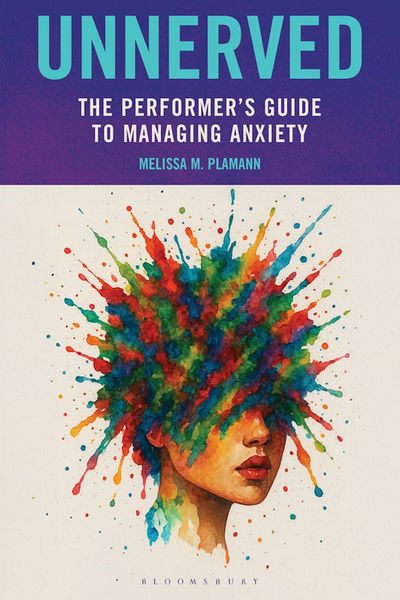
“Unnerved is the book every performer, educator, and artistic soul has been waiting for. With rare honesty and generous insight, Melissa M. Plamann replaces shame with understanding, and fear with practical, compassionate tools. This isn't just a guide – it's a lifeline. Plamann has written the most human, intelligent, and genuinely helpful book I've read on performance anxiety. This book might not only help you reclaim your voice – it may restore your relationship with the art you love.”
— Matthew Denman, Grammy acknowledged Music Educator and Executive Director of the Leyenda Foundation
Featured in
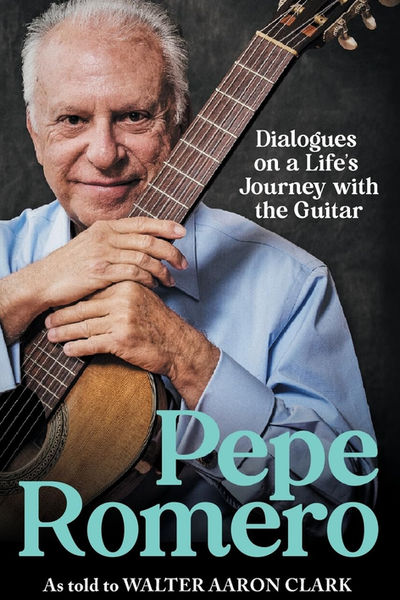
Pepe Romero’s New Book
“One of the students at that festival, Matt Denman, had the idea to launch the Celedonio Romero Guitar Institute at Oklahoma City University, where he is professor of guitar studies. That was a big success, and we’ve continued it to this day.”
— Pepe Romero, Dialogues on a Life’s Journey with the Guitar
Matthew Denman is honored to be recognized in Pepe Romero’s published account of the Romero family’s legacy and the origins of the Celedonio Romero Guitar Institute.
Featured in Building an Award-Winning Guitar Program (Bill Swick, GIA Publications, 2023)
“The most effective recruiter I have worked with is Matt Denman … He regularly exudes the qualities of a Good News Person and is a good model to follow. People genuinely like him, want to study with him..."
— Bill Swick, GIA Publications, 2023
[Read full excerpt → Publications & Press]

And I have to say that this institute exists and can exist because we have someone like Matt Denman,who he himself has a parallel soul and spirit to my father. So he believes and is that which my father expressed and was. So in Matt, my brother and I, my nephews, we found the perfect partner. For we all can feel the true spirit and the essence of who my father was and who my father is.

“Unnerved is the book every performer, educator, and artistic soul has been waiting for. With rare honesty and generous insight, Melissa M. Plamann replaces shame with understanding, and fear with practical, compassionate tools. This isn't just a guide – it's a lifeline. Plamann has written the most human, intelligent, and genuinely helpful book I've read on performance anxiety. This book might not only help you reclaim your voice – it may restore your relationship with the art you love.” — Matthew Denman, Grammy-nominated Music Educator and Executive Director of the Leyenda Foundation

Matthew Denman’s work as a performer, educator, and visionary leader has been featured in national publications and professional journals. His career was profiled in Soundboard (the journal of the Guitar Foundation of America), where he was described as a “sterling figure in the classical guitar community” with a reputation as “player, scholar, impresario, composer, and all-around esteemed figure.” In a feature interview with Thomas Amoriello Jr., Denman reflected on his rise in the guitar profession, his philosophy of education, and his commitment to building programs that serve diverse communities. His perspectives on program creation, leadership, and the challenges of higher education continue to shape national conversations about the future of music education.

Stephen Aron Blog
Stephen Aron reflects on Matthew Denman’s visit to Oberlin, praising his thoughtful, practical advice and his deep connection to the Romero tradition.

The most effective recruiter I have worked with is Matt Denman, currently at Oklahoma City University. He makes a point o visiting our campus two or three times every year. He schedules his visits during our quarter concerts to hear student per ormances, meets the students, learns their names, and has an opportunity to comment on their performance the next day when he meets with them. In addition, Denman schedules visits to take parents o in-terested students to break ast and/ or lunch to get to know them and also give them an opportunity to get to know him. In addition, Denman hosts an an-nual guitar estival that includes activities and competitions or high school and college students held on his campus in Oklahoma. Each year, we receive an invitation to attend, and it gives our students an opportunity to visit his school. Denman’s approach to recruiting has been most successful. He holds the record or recruiting the most students from our program. pg. 69 “Make a point of talking to others when you need absolutely nothing from them. Go out of your way to have positive conversations. Be careful not to complain or be overly critical and certainly do not speak poorly of others. Be the ‘Good News Person.’ This idea comes from Matt Denman, a well-known music educator, guitarist, composer, and businessman from Oklahoma City, Oklahoma. Denman regularly exudes the qualities of a Good News Person and is a good model to follow. People genuinely like him and want to spend time with him. Others want to study with him or hear him perform. They are anxious to hear his new compositions and, most importantly, they want to do business with him. Follow Denman’s model and this could be you. If his name seems familiar, Denman was mentioned in Chapter 5 as a model university recruiter. His positive attitude is contagious, and it has proven very successful in attracting students to his programs.” pg. 153

GUITAR SALON INTERNATIONAL
"Matt has a magnetism brought about, I think, by his sheer passion to provide the greatest opportunities he can for the young people of Oklahoma." Matthew Hinsley

ACOUSTIC GUITAR MAGAZINE
“Young people love community. They love to have fun with their peers,” Denman says. “The camp helps provide that atmosphere.”

SOUNDBOARD MAGAZINE
Featured on cover of Soundboard Magazine

OKLAHOMAN
Canterbury Voices mixes unlikely musical styles in season opener 'Bluegrass and Blue Jeans'


CLASSICAL GUITAR MAGAZINE
PICTURE ON A TRAIN Matthew Denman This is a substantial work,... The score tells a story: there’s mist, a train, its whistle,... I feel a good ensemble could make magic out of this «intermediate» piece. (Classical Guitar Magazine)

REVIEW
“Matt Denman is a perfect example of the typical, consummate modern classical guitarist. He is a performer, composer, educator, and overall ambassador for the position our popular instrument holds in Western culture,”

